New Research Shows the Heart and Brain Work as One — Linking Emotion, Focus, and Health.
Modern science is slowly confirming something humans have felt for centuries:
your heart and your mind are not separate forces fighting for control.
They are partners in every emotion, every decision, and every moment of clarity.
A major scientific statement from the American Heart Association in 2023 pulled this truth into sharp focus — revealing how the state of your heart deeply shapes the health, stability, and sharpness of your brain.
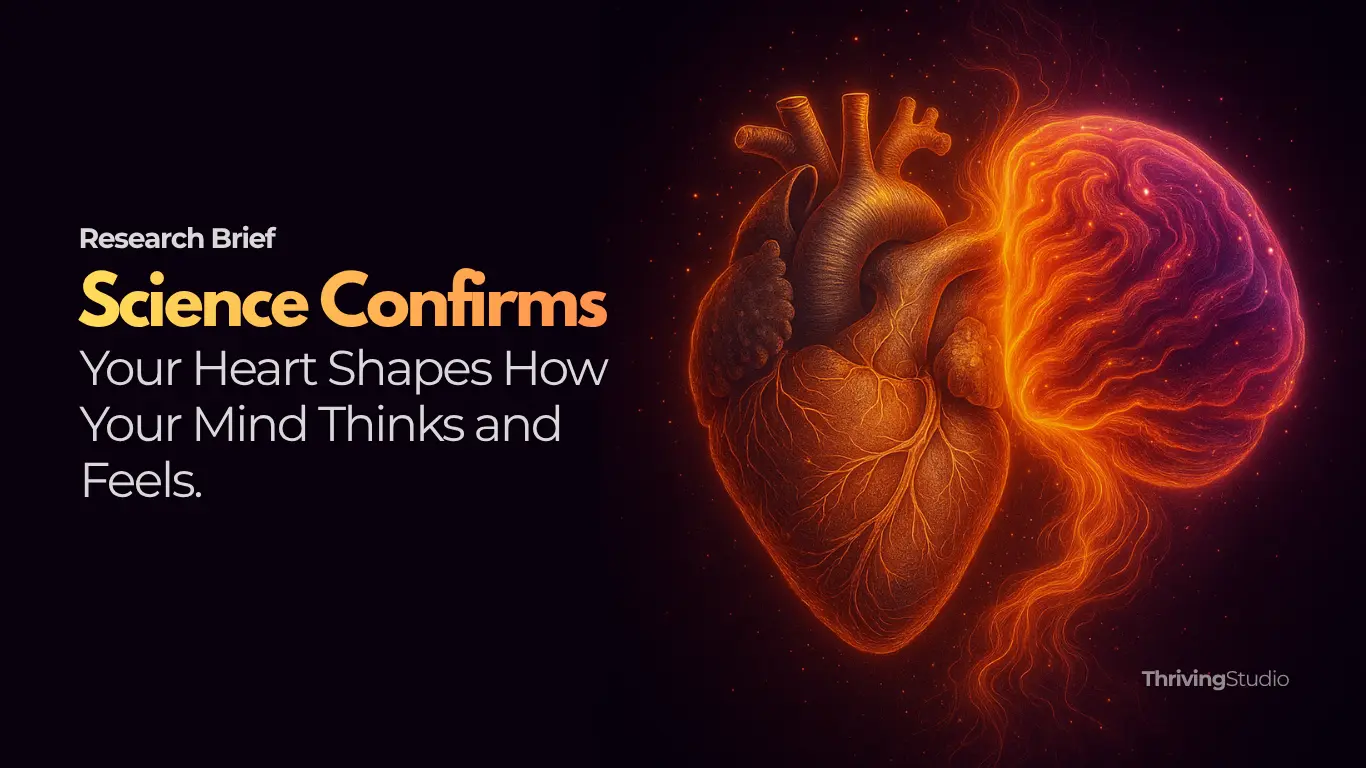
The Quiet Intelligence of the Heart
For most of history, the heart has lived as a metaphor.
We spoke of “following your heart,” “having a change of heart,” or “feeling something in your chest,” while assuming all real thinking happened above the neck.
Today, that metaphor is turning into measurable biology.
The same rhythm poets wrote about is now tracked by neurologists, cardiologists, and psychologists. Signals from the heart are being studied not just as background noise, but as active contributors to emotion, attention, and decision-making.
What we once called “listening to your heart” is becoming a literal, physiological reality.
The Research That Changed How We See the Heart
In 2023, the American Heart Association (AHA) released a landmark scientific statement titled “Cardiac Contributions to Brain Health” in the journal Stroke.
After reviewing decades of research, their message was simple and powerful:
The heart and brain form a single, continuous system — sharing rhythm, energy, and intelligence.
Key findings from the statement include:
- The heart sends a constant stream of signals to the brain through nerves, hormones, and blood flow.
- These signals influence attention, emotion, and cognitive performance — not just long-term health, but moment-to-moment experience.
- When the heart functions well — with strong rhythm, healthy vessels, and stable blood flow — the brain benefits through sharper memory, better mood, and greater resilience to stress.
- When the heart struggles, the mind struggles too: thinking can slow down, focus becomes harder, and the risk of depression and cognitive decline rises over time.
The AHA statement also stressed something crucial:
protecting the heart through movement, diet, sleep, and stress management may be one of the most effective ways to protect the brain and reduce the risk of dementia later in life.
What we do for our heart today can shape how clearly we think decades from now.
Why This Connection Matters
Researchers now use the term heart–brain axis to describe this relationship — a living, two-way feedback loop.
With every beat, the heart sends:
- Pressure waves that affect blood flow to different regions of the brain.
- Electrical signals that travel along nerves and influence brain rhythms.
- Hormonal messages that modulate stress, calm, and emotional tone.
The brain doesn’t simply “command” the body. It listens.
It listens to the rhythm and quality of every heartbeat and adjusts its own activity accordingly. When the heart is coherent and stable, the brain is more likely to be focused, calm, and flexible. When the heart is under strain, the brain is more likely to be scattered, foggy, or easily overwhelmed.
Heart health, then, is not just about living longer.
It is about:
- How clearly you can think.
- How steadily you can feel.
- How effectively you can respond to stress, conflict, and change.
Each heartbeat fuels not only the body’s life — but also the mind’s calm.
The Biology Behind the Poetry
Beneath this connection lies the neurocardiac axis — the network of nerves, hormones, and electrical pathways that link the heart and brain.
One of the key players is the vagus nerve.
This long nerve runs from the brainstem down through the chest and abdomen, constantly carrying information about your inner state. A significant portion of its fibers run from the body up to the brain, not the other way around, meaning your brain is continuously being updated about what the heart and other organs are experiencing.
You can feel this communication in real time.
Take a slow, deep breath in.
Then exhale gently.
As you do this, your heart rate naturally rises slightly as you inhale and falls as you exhale — a pattern known as respiratory sinus arrhythmia. It’s a sign of healthy flexibility in your nervous system.
This simple rise-and-fall sends a message to the brain:
“You’re safe. You can relax. You don’t need to fight or flee.”
When this system works well, you’re better able to:
- Recover from stress
- Regulate emotions
- Shift from tension to clarity without collapsing or shutting down
Our physiology and psychology are not separate layers.
They are synchronized signals.
Science is finally catching up to what intuition has long whispered:
the way we breathe, move, and care for our heart shapes the quality of our thoughts.
What It Means for Everyday Life
You don’t need medical equipment to sense the heart–brain connection.
You feel it every day.
- When your pulse races, your thoughts often race with it.
- When your heartbeat steadies, your mind starts to organize itself.
The habits we treat as “basic wellness” are, in reality, conversations between heart and brain — tiny negotiations about safety, attention, and clarity.
Simple Ways to Support the Heart–Brain Axis
You don’t have to overhaul your life overnight.
Even small, repeatable actions can support this system:
- Walk daily, even for 10–20 minutes
Gentle movement improves circulation, lowers resting heart rate over time, and supports both mood and focus. - Practice slow breathing once or twice a day
Try inhaling for a count of 4 and exhaling for a count of 6–8 for a few minutes. Longer exhales activate the vagus nerve and help your brain register safety. - Protect your sleep
Consistent sleep supports blood pressure, heart function, and emotional stability. A calmer heart through the night leads to a clearer mind in the morning. - Choose foods that care for your arteries
More whole foods, healthy fats, and fiber — fewer ultra-processed, sugar-heavy, and deep-fried options. Healthier vessels mean more stable blood flow to the brain. - Spend time in nature or quiet spaces
Trees, sky, and open spaces lower stress markers and help bring heart rate and breathing into a more coherent rhythm. - Limit late-night overstimulation
Endless scrolling, heavy meals, or intense arguments before bed keep the heart and nervous system on alert, making it harder for the brain to reset.
Each of these habits sends a similar message through your body:
“You’re safe enough to think clearly.”
They’re not minor lifestyle tips.
They’re physiological signals that shape how your brain will work — today and years from now.
Quick Answers to Common Questions
1. How does heart health affect brain health?
A healthy heart pumps blood efficiently through flexible, open vessels. That means the brain receives a steady supply of oxygen and nutrients — essential for memory, focus, and emotional balance. When the heart or vessels are damaged, the brain can suffer from reduced blood flow, tiny silent strokes, or long-term structural changes that increase dementia risk.
2. What is the heart–brain axis?
The heart–brain axis is the two-way communication loop between your heart and brain. It includes nerves (like the vagus nerve), hormones, blood flow, and pressure signals. Information is constantly moving in both directions, shaping how you feel, think, and respond to the world.
3. Can simple practices like breathing or walking really change anything?
Yes. While they can’t replace medical care, slow breathing, regular movement, and quality sleep directly influence heart rate, blood pressure, and nervous system tone. Over time, these shifts can support both cardiovascular health and mental clarity — especially when practiced consistently.
Reflective Closing
In a world that celebrates constant mental effort, there is a quieter truth emerging from science:
The mind is not a tyrant sitting above the body.
It is a partner, listening to every signal your heart sends.
The next time you feel scattered or overwhelmed, you don’t have to chase more thoughts or force more focus.
You can pause.
You can breathe into your chest.
You can take a short walk, step outside, or simply place a hand over your heart and feel its rhythm.
Each beat is more than circulation.
It is a compass — aligning thought with feeling, logic with empathy, and effort with ease.
To think clearly, we don’t only need more information.
We need a body that feels safe enough to let the mind soften, listen, and see.
Source
American Heart Association (2023). Cardiac Contributions to Brain Health: A Scientific Statement from the American Heart Association.
Stroke, 54(5), e142–e168. Link
Want More Practical Insights?
Get focused ideas on psychology, discipline, and creative growth delivered to your inbox.
